Wïrked
Wirk is a revolutionary system that redefines how people pay for products. Instead of using money as the middleman between work and purchases, Wirk removes that extra step. Users no longer need to earn money first and then spend it. With Wirk, they can simply work directly for the things they want — a true "buy now, work later" model.
With Wirk, users make purchases using tap-to-pay on their phones. Once a purchase is made, the app immediately converts the original price into wirk hours rather than a monetary amount. Users then complete small tasks inside the app to work off what they owe — mainly image-tagging activities that help train AI models for Gork.
Through this system, users receive the product they want, work opportunities, and a single integrated platform for both labour and payment. No side jobs to search for, no cash transactions. Wirk creates a new payment experience built on the value of human labour.
Wïrked
Overview
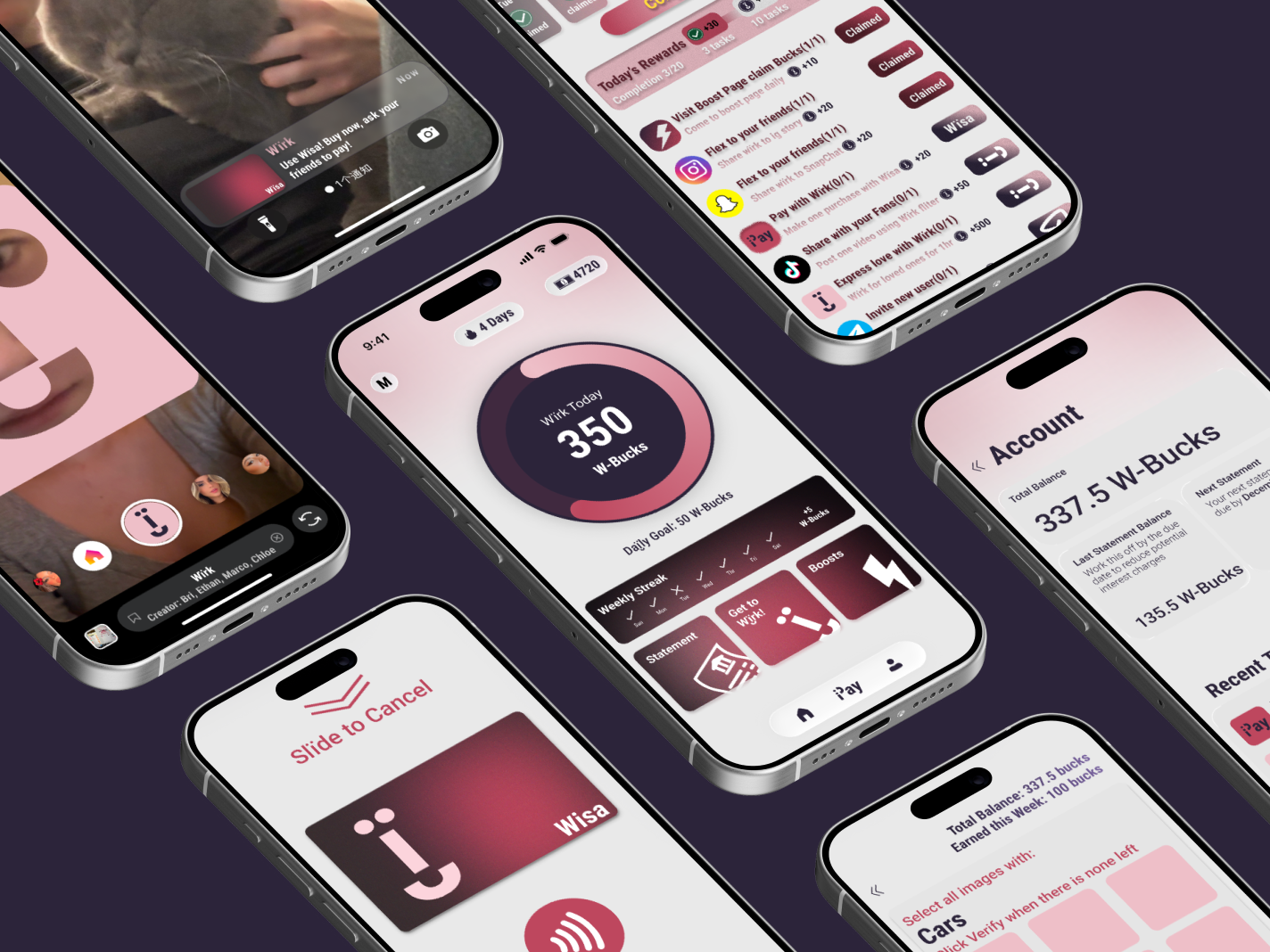
Wïrked is a speculative UX project exploring what happens when labour and commerce become inseparable. The fictional Wïrk platform removes money from transactions entirely, offering users a "buy now, wïrk later" model — purchases are paid off through microtasks like AI image classification, directly within the app.
The design challenge was to make exploitation feel delightful. Every screen had to balance the sinister premise of unpaid gig labour with an interface so clean, gamified, and familiar that users might not notice — or might not mind. W-Bucks, streak rewards, and boost mechanics were designed to maximise engagement and rationalise participation.
Design Process
The interface was intentionally designed to weaponise familiarity. Streak counters, spin wheels, and progress rings borrow conventions from fitness and gaming apps — contexts where compulsive engagement is considered a feature. By making the labour loop feel rewarding rather than extractive, the UI challenges users (and designers) to interrogate what "good UX" can obscure.
The captcha task screen — where users identify images to "train AI" — is drawn directly from how CAPTCHA systems work in the real world. The irony is intentional: unpaid micro-labour is already everywhere, Wïrk simply makes the transaction visible and monetises it.